

"Truly Mental Illness": Reflections on Minority Mental Health Month
Part II

Content Notice: discussions of suicidal ideations
In the summer of 2019, I had a phone chat with Donald where he shared an alarming story with me.
After that difficult first semester of his PhD program at Mizzou, the moment in the pedagogy class, and the meeting that requested for him to attend therapy sessions, his mental health declined further.
He described his struggles in the fall as outward, and struggles in the spring as inward.
He’d found a therapist of color but couldn’t get an appointment with her until late summer. In the interim, he grew sad and deeply self-critical. He spent hours upon hours studying and writing, pushing himself until he literally cracked a rib from the extended time spent in a hunched position over his laptop.
At the end of that term, he got a C in History of the English Language course, and it broke him. “I felt like such a fuck up, wasting these amazing opportunities people had given me.” As he had since childhood, he felt the weight and responsibility of the world’s problems bearing down on his shoulders, and it was crushing him.
Feeling like a burden to others and the planet, he made a plan to die by suicide.
It would be his fifth plan and attempt over the course of his life.
He drove back to Hartsville, SC where he’d attended undergrad and where his mother lived to see her one last time. He planned to park his car on the side of a roadway, walk deep into the woods, remove and hide any identifying information, find a tall cliff, and dive off headfirst. His reasoning at the time was that his body would never be identified, and give comfort to his loved ones that he was maybe still out there, living a different life somewhere else.
That plan and reasoning, he says now, “Is truly mental illness.”
I distinctly remember the moment he told me the as I was driving in my car, crying as he spoke. And when he finished, I had a kneejerk reaction and yelled at him, telling him that plan was the dumbest thing I’d ever heard. I did everything wrong. I was so shocked and upset, never knowing him as anything other than strong and resilient.
We laugh about it now, and he gives me grace for my reaction.
Years later, in our conversation for this article, I realize I’d never asked him what stopped him that day. His answer wasn’t at all what I’d expected.
He referred me to these three pictures on his Instagram from that time in Hartsville:
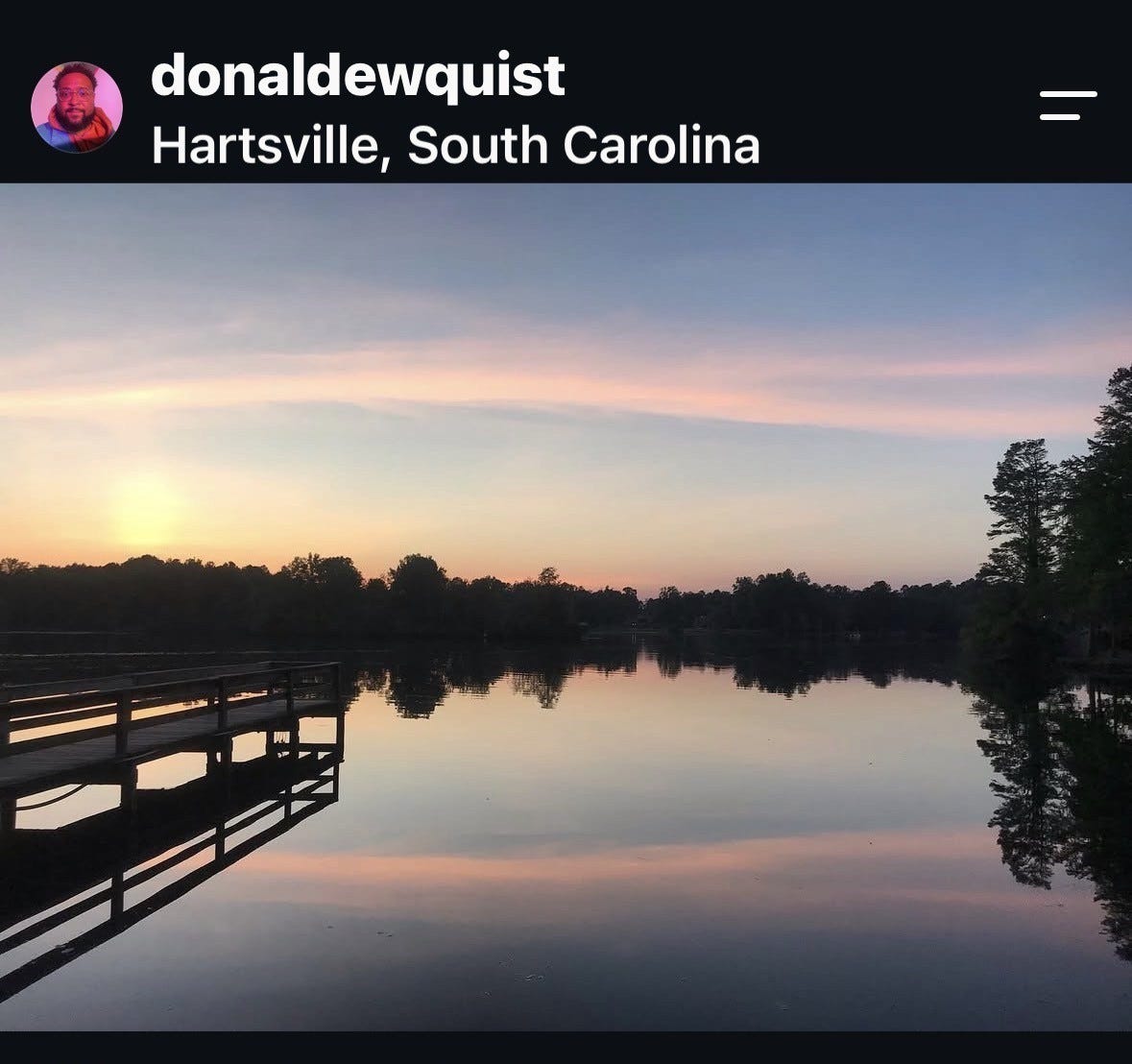


He said that day he received an unexpected invitation from a friend to go to an animal rescue shelter where she and her son volunteered and hang out with them. Why not, he’d thought. They came and picked him up, and he spent time holding and playing with puppies, listening to the other kids from the program talk about plans for their future. Then they visited a library on the college campus where he’d once worked.
It was a simple day, full of little everyday things that felt sweet.
Then his new partner, Bailey, called and said she was driving to Hartsville with her son to pick him up so they could ride back to Missouri together, so he wouldn’t be alone in his travels.
He had, he realized in those small moments, real community.
It would be his last suicide plan.
Back in Missouri, he finally met his therapist for their first appointment—an Asian woman with a blunt therapeutic approach that turned out to be just what he needed.
And how did he overcome his cultural distrust of the medical community?
Patience. She had patience with him.
He ended up doing all six sessions even though he could’ve stopped at four. He was resistant at first, trying to “win” therapy and be the best at it, reading the books she recommended and taking notes to discuss, saying all the “right” things. But by the third meeting, she called him out on it. She made it clear she knew he was bullshitting her.
Disarmed, he went back for another session and for the first time got real, realizing he might actually need therapy. He opened up about his childhood, his parents, and particularly his father’s lack of involvement in his life. She pushed back on what he considered to be “normal” thoughts of burden and failure, and when he shared his suicide ideations and plan from earlier that summer, she simply said, “That’s brain chemistry…You’re not original.” Blunt, but it resonated with him.
When his initial sessions ended, he attempted to make more appointments with her but learned she’d left for another job in a different state, something many therapy patients deal with, but is compounded in the minority community. Once again distrustful of therapy and doctors in general, he didn’t go back for four years. His symptoms of anger and sadness returned and worsened until his now-wife insisted he go back. At that point, he turned to telehealth.
He’s been with current therapist, a Black, queer, female-identifying, hearing impaired therapist, for three years now. “She is a unicorn,” Donald said, and she’s been a great fit for him.
But even then it took a year for Donald to drop his protective, defensive behaviors to start opening up and making progress, just as he had with his previous therapist.
While there’s a different energy to physically being in a room with someone, he says, and there are days when telehealth is a technical challenge, it’s better than the alternative. “Holding it in, and becoming dangerous and miserable…It’s either telehealth, or something’s going to get broken,” he says.
Money is also a common barrier to therapy, especially in minority communities experiencing poverty. Donald’s first sessions were available through his university, but after those sessions, his insurance didn’t cover therapy. It took another four years and a tenured professor position to finally get insurance that would help some of the expenses. Even then, he still only sees his therapist twice month, what he can afford.
While looking for a therapist through telehealth, he noted there were still few therapists of color and once again, long wait times to get an appointment. “There will be a line,” he says. “But even though they’re swamped,” he adds, “they’re worth the wait.”
I’ve thought about this more as both Donald’s friend and as someone who writes about the gaps in America’s mental healthcare system. The mental health community talks a great deal about encouraging people to seek help, as if the decision exists in a vacuum. We say, Reach out. Talk to someone. Get treatment. But we don’t always acknowledge what we’re asking people to overcome in order to do that.
For anyone who has been taught that asking for help is weakness, seeking treatment requires unlearning. For anyone whose community or culture has been harmed or dismissed by healthcare institutions, trust must be earned. For anyone who rarely sees people who look like them represented in conversations about mental health, even finding the language to describe what is happening can be difficult.
This is why voices like Donald’s matter so much.
As writers, we believe in the power of language to make the invisible visible. Donald’s willingness to speak about mental health does exactly that. It makes room. It tells another Black man struggling alone that he’s not the only one. It challenges the idea that strength means silence and offers a different definition. That perhaps strength can mean telling the truth about what hurts. Perhaps courage can mean walking into a therapist’s office, or logging onto a Zoom appointment. Perhaps survival can simply mean accepting that you don’t have to carry everything by yourself.
I also now know that friendship means listening without assuming we fully understand another person’s experience, and also by checking our reactions. I can’t know what it’s like to move through the world as a Black man. I can’t fully understand the cultural pressures Donald has encountered or the ways race and masculinity have shaped his experiences with mental health. But I can listen, and be grateful for his willingness to tell the truth.
Minority Mental Health Awareness Month is an opportunity to talk about disparities in access and treatment, but it should also be a time to listen to individual stories. Behind every statistic is a person trying to navigate not only depression, anxiety, trauma, or another mental health challenge, but also the messages they have received about what those struggles supposedly say about them.
We need Black men to know that seeking therapy does not diminish their strength, masculinity, faith, or dignity. We need healthcare systems worthy of their trust. And we need to listen when people like my friend Donald choose to speak.
Because sometimes the most powerful thing a writer can do is give language to what others have been taught never to say aloud.
And sometimes the most powerful thing a friend can do is just listen.
Thank you for writing about mental health.
Thanks for sharing & hope he continues to get the help he needs...